I'm DongYeop Lee.I build voice agents.
I'm an AI engineer at Hemut (YC P25) and a founding engineer at Sense AI, where my voice interviewer placed 291 calls during SF Tech Week.
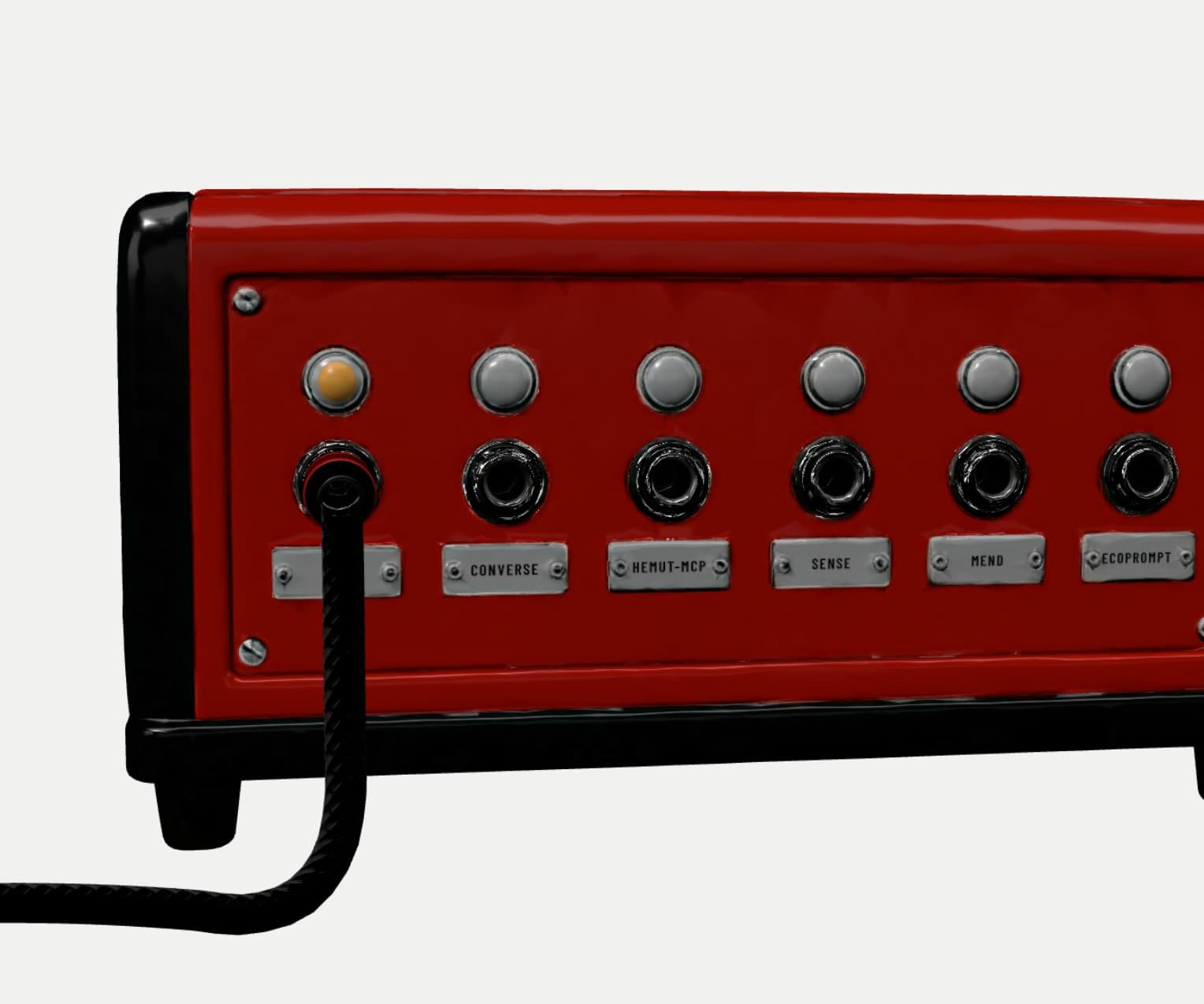
Drag the plug into a jack, or pick a line.Tap a jack, or pick a line.
Most people call me DY. I study physics and computer science at USC and graduate in December 2028. Outside Hemut and Sense AI, I'm also a founding engineer at KrootMe.
This is a full call to a clinic billing agent I built on my own.
Work
Converse
Hemut (YC P25), since April 2026
I build the voice agents that take freight calls at Hemut: load status lookups, transfers, and rate negotiation.
- Recorded median time to first speech on confirmed transfers
- 310 ms
- Fewer LLM generations on eligible status-lookup turns
- 50%
Hemut-MCP
Hemut (YC P25), since April 2026
I work on the copilot inside Hemut's logistics software. Each part of a question gets routed to the tools it needs, and multi-tool runs wait for approval.
- Questions in the regression bank I built, across 20 routing and context categories
- 333
- Organizations in the Postgres estate its database tools run against, each scoped by row-level security
- 9
Sense AI
Sense AI (a16z), since September 2026
Sense AI is a user-testing platform for coding agents. I shipped its real-time voice interviewer and the MCP server teams use to run their tests.
- Calls placed by the voice interviewer during SF Tech Week
- 291
- Interviews run, 16+ hours, for 21 hackathon teams
- 129
Mend
F26 Origin Hackathon, finalist
I built a crowdsourced infrastructure-inspection app in 72 hours. A photo of damage gets classified on the phone, matched to the building the camera faces, and checked by a vision model.
- On-device damage classifier (EfficientNet-B0, Core ML)
- 8 MB
- mAP, against 0.954 for ConvNeXt-tiny with 5x the parameters
- 0.949
EcoPrompt
USC AI4GOOD Hackathon, April 2026
I built a chat app that reuses answers to similar questions, sends simpler prompts to a smaller model, and shows the modeled energy saved.
- Less modeled energy per query on a cache hit, not metered
- 98.6%
- Less modeled energy per query on a right-sized model, not metered
- 90%
Experience
Hemut (YC P25)
AI Engineer, April 2026 to now
- Cut required LLM generations in half on eligible status-lookup turns by running the tool deterministically, and recorded a 310 ms median time to first speech on confirmed transfers.
- Reduced cold API latency from 516 ms to 50 ms with stale-while-revalidate feature-flag caching, background refreshes, and startup prewarming.
- Added pre-rollout migration gates for 3 ECS services and a CI job that rebuilds the schema from scratch, fixing 4 distinct bootstrap failure modes.
Sense AI (a16z)
Founding Software Engineer, September 2026 to now
- Shipped a real-time voice interviewer that placed 291 calls and ran 129 interviews for 21 teams during SF Tech Week.
- Built a 15-tool MCP server with 400+ tests, and retry-safe dispatch so concurrent workers never contact a tester twice.
KrootMe
Founding Software Engineer, September 2026 to now
- Hardened PostgreSQL authorization with function permissions and booking-state guards, taking successful unauthorized operations from 7/10 to 0/10 in synthetic regression tests.
- Built a job-enrichment pipeline that syncs Greenhouse, Lever, and Ashby hourly for 1,000+ active users, keeping source evidence for every extracted salary and sponsorship.
IDX Exchange
Natural Language Processing Engineer, February to May 2026
- Built hybrid property search on MiniLM embeddings, FAISS retrieval, and BM25 keyword ranking.
- Raised entity-extraction micro-F1 from 78.2% to 88.1% and cut false-positive price extractions by 75% on a fixed synthetic benchmark.
University of Southern California
B.S. in Physics and Computer Science, GPA 4.0, graduating December 2028
Dean's List, Phi Kappa Phi Recognition Award, USACO Platinum